Welcome to the first blog post of Purohitam.ca.
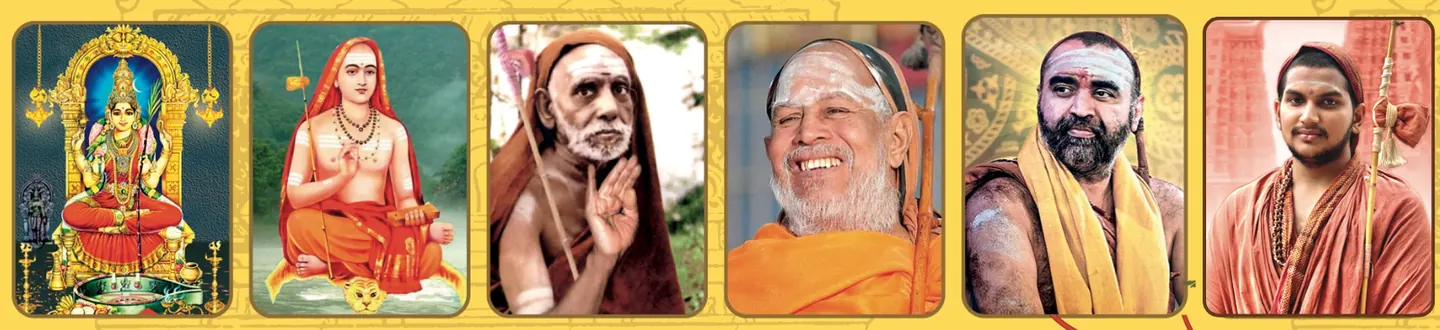
Namaskaram. With humble pranams to the Kanchi Kamakoti Peetham Peetadhipathis and Sringeri Jagadgurus, and with the blessings of the Almighty and our revered Rishis and Acharyas, I begin this journey to share the wisdom of our Sanatana Dharma with our community.
In our daily lives, we faithfully observe festivals, vrathams, and samskaras according to the Hindu calendar. However, many of us follow these practices without fully understanding the deeper principles behind how time itself is measured in our shastras. To truly reconnect with our parampara, it is important to understand how our ancestors perceived kala (time).
One of the foundational texts that explains this is the Surya Siddhanta, a great work of Vedic astronomy. In this grantha, time is not viewed as a simple linear flow but is classified into nine distinct manas, or measures of time.
As stated in Chapter 14, Verse 1: “There are nine manas (kinds of time): the Brahma, the Divya, the Pitrya, the Prajapatya, as also that of Jupiter, the Solar, the Terrestrial, the Lunar and the Sidereal.”
Among these, four are most relevant to our daily observances: Saura (Solar), Chandra (Lunar), Nakshatra (Sidereal) and Savana (Terrestrial). In practice, most Hindu families follow either the Souramana or the Chandramana system.
Souramana (Solar Tradition)
The Souramana system is based on Surya Bhagavan’s movement through the Rashi Chakra. The zodiac is divided into twelve Rashis of thirty degrees each. As the Earth revolves, it appears that Surya transits through these Rashis, and each such transition is known as Sankranti.
A new solar month begins with Sankranti, and the twelve months include Mesha, Vrushabha, Mithuna, and so on. This system is traditionally followed in regions such as Tamil Nadu, Kerala, and parts of Bengal. Festivals like Puthandu and Vishu mark the beginning of the year when Surya enters Mesha Rashi.
Chandramana (Lunar Tradition)
The Chandramana system is based on Chandra Bhagavan’s movement and phases. Here, time is calculated using Tithis, which are determined by the angular distance between Surya and Chandra, each Tithi corresponding to twelve degrees.
The month is divided into two Pakshas: Shukla Paksha, the waxing phase, and Krishna Paksha, the waning phase. Together they form a Maasa. Within this system there are two traditions: Amanta, where the month ends on Amavasya, and Poornimanta, where the month ends on Pournami.
The Amanta system is commonly followed in Karnataka, Andhra Pradesh, Telangana, and Maharashtra, where the New Year is celebrated as Ugadi.
Significance in our tradition
Understanding whether one follows Souramana or Chandramana is essential to preserving one’s kula acharam and sampradaya. It also explains why the same festival may be observed on different days by different communities. This is not a discrepancy, but a reflection of the richness and diversity within Sanatana Dharma.
In our tradition, kala is not merely a measurement. It is divine. The Panchangam, which includes Tithi, Vara, Nakshatra, Yoga, and Karana, reflects the cosmic rhythm established by Ishwara.
At Purohitam.ca, this humble effort is to guide our community in understanding not just the “what” of our practices, but also the “why,” so that we may follow our dharma with shraddha and jnana.
With Acharya anugraham, we will continue to explore deeper aspects of our shastras in future posts.
Share this post
The first post of Purohitam.ca on how our shastras measure time, the nine manas of the Surya Siddhanta, and why the same festival falls on different days.