The Meaning and Significance of Śrī Rudram
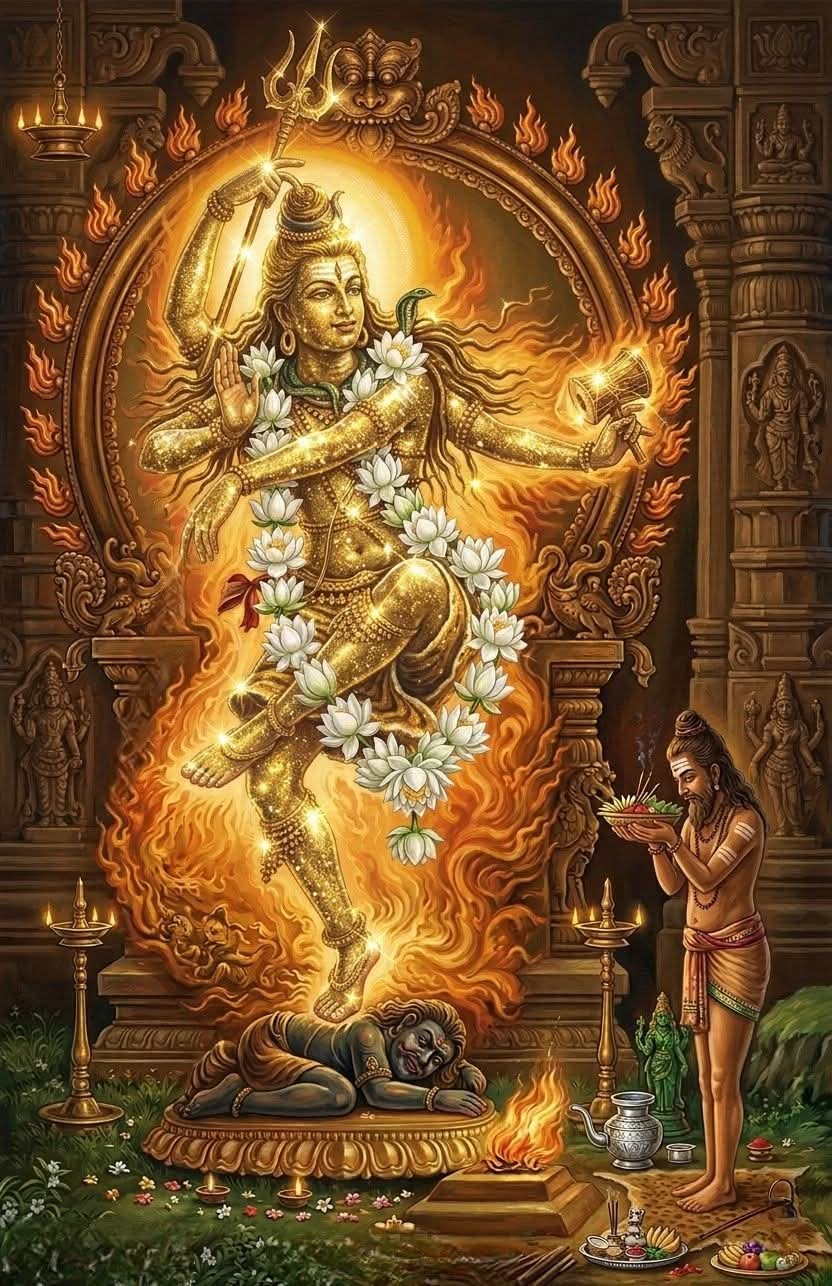
Śrī Rudra Ekādaśinī is an important form of Vedic worship dedicated to Bhagavān Rudra, worshipped in the Śaiva tradition as Śrī Parameśvara, Lord Śiva.
The foundation of this worship is Śrī Rudram, also called Rudra Praśna or Śatarudrīya, from the Taittirīya Saṃhitā of the Kṛṣṇa Yajurveda. It is one of the most revered sections of the Veda and is recited for the worship of Rudra, the Lord who is both awe-inspiring and compassionate, both the power of transformation and the source of healing and auspiciousness.
The purpose of Rudra worship is not merely to ask for worldly benefits. It is an act of upāsanā, devotional contemplation, through which the devotee approaches the Lord with reverence, surrender, prayer and gratitude.
The Meaning of the Name Rudra
The name Rudra is interpreted in more than one way in the traditional sources.
Rudra is associated with that which is powerful, intense and capable of shaking the limited understanding of the human being. He is also understood as the one who removes sorrow and suffering at their root.
Thus, Rudra is not simply a frightening form of divinity. The same Lord who possesses tremendous power is also invoked as the compassionate healer and protector.
In Śrī Rudram, the devotee does not deny the powerful forces of life. Instead, the devotee acknowledges them and prays that they may become peaceful and beneficial.
One of the central prayers of Śrī Rudram says:
या ते रुद्र शिवा तनूरघोरापापकाशिनी ।तया नस्तनुवा शन्तमया गिरिशन्ताभिचाकशीहि ॥Yā te Rudra śivā tanūr aghorā pāpakāśinītayā nas tanuvā śantamayā giriśantābhicākaśīhi
“O Rudra, may You behold us with Your auspicious, peaceful and non-fearful form.”
This prayer expresses the heart of Rudra worship: may the Lord’s power be gracious toward us; may that which is fierce become a source of protection, purification and welfare.
Rudra and Śiva
In the Vedic mantras, the name Rudra is prominent. In the later Śaiva understanding, Rudra is worshipped as Śiva, the auspicious and all-pervading Lord.
The word Śiva means “auspicious,” “benevolent” and “that which brings welfare.” Rudra and Śiva are therefore not understood as two unrelated deities. They are two ways of contemplating the same Parabrahman, the Supreme Reality, through the form of the Lord.
The devotee approaches Him as:
- Rudra, the powerful Lord who removes sorrow and ignorance.
- Śiva, the auspicious and compassionate Lord.
- Śaṅkara, the giver of auspiciousness.
- Śambhu, the source of happiness and welfare.
- Mahādeva, the Great Lord.
- Paśupati, the Lord and protector of all living beings.
- Īśāna, the supreme ruler and inner Lord.
- Giriśa, the Lord of the mountains.
- Tryambaka, the three-eyed Lord.
- Mṛtyuñjaya, the Lord who transcends death.
These names do not imply many competing gods. They reveal the many guṇas, powers and functions of the one Lord.
The Two Portions of Śrī Rudram
Śrī Rudram has two principal portions:
- Namakam
- Chamakam
They are recited together because they express two complementary aspects of prayer.
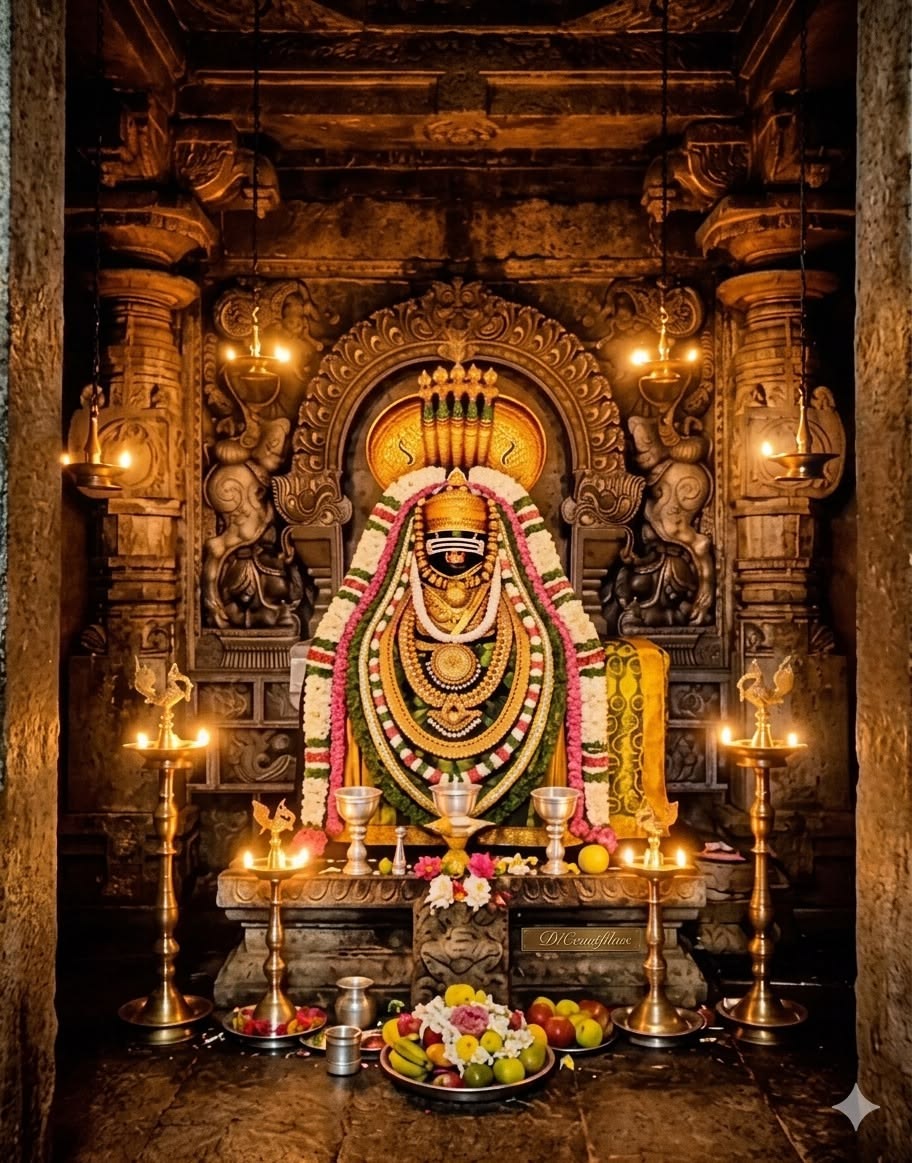
Namakam: Offering Salutations
Namakam is so called because of the repeated use of namaḥ and namo.
The word namaḥ means:
“Salutations,” “reverence,” or “I bow.”
The repeated salutations are an expression of namaskāra, surrender and reverence before Īśvara.
Namakam addresses Rudra in many forms and in many places. He is invoked in the mountains, forests, rivers, villages, roads, assemblies, animals, protectors, workers, leaders and hidden forces of creation.
The teaching is that the Lord is not confined to one form or one place. The entire jagat, the universe, is pervaded by Īśvara.
The devotee therefore learns to see the sacred presence of Rudra throughout creation.
Namakam also asks Rudra to withdraw His fierce weapons and to bless the world with His śānta-svarūpa, His peaceful and gracious form.
Chamakam: Prayer for Completeness
Chamakam is so called because of the repeated phrase cha me, meaning:
“And may this be granted to me,” or “May this also be present in me.”
Chamakam contains prayers for the many conditions necessary for a complete life. These include:
- Food and nourishment.
- Water and vitality.
- Health and strength.
- Longevity.
- Intelligence and memory.
- Courage and stability.
- Family and social welfare.
- Material resources.
- Knowledge and spiritual understanding.
- Freedom from limitation.
Chamakam is not a prayer born of greed. It is a recognition that the human being requires many forms of support in order to live a dhārmic life.
The devotee prays not only for personal enjoyment, but for the capacity to perform one’s duties, serve others, pursue knowledge and walk the path of dharma.
Namakam teaches the mind to bow. Chamakam teaches the mind to place its needs before the Lord with humility and trust.
Why Are Namakam and Chamakam Recited Together?
The proper attitude of prayer is reflected in their order.
First, the devotee recognizes the greatness of Īśvara and offers namaskāra. Then the devotee presents the needs of life before the Lord.
This order is spiritually significant. The devotee first acknowledges:
“Everything is sustained by Īśvara.”
Then the devotee prays:
“May I receive what is required to live a life of dharma and spiritual growth.”
Thus, Namakam is not merely a list of salutations, and Chamakam is not merely a list of requests. Together they form a complete vision of prayer:
- Reverence before request.
- Surrender before seeking.
- Gratitude before receiving.
- Personal welfare joined with universal welfare.
The Significance of the Number Eleven
The word Ekādaśa means “eleven.”
Śrī Rudram is traditionally arranged in eleven anuvākas, or sections, in Namakam and eleven anuvākas in Chamakam. The number eleven is therefore deeply connected with the structure of the Rudra Praśna.
In many traditional recitation systems, Rudram is performed in multiples of eleven. The exact terminology and arrangement can differ among Vedic śākhās, ritual manuals and priestly lineages.
In one widely followed arrangement, the eleven anuvākas of Namakam are recited in sequence, with the corresponding anuvākas of Chamakam recited according to the prescribed order. In an extended collective observance, multiple ritwiks may participate in the elevenfold recitation.
The number is not significant merely because repetition produces a larger numerical result. It reflects the sacred structure of the mantra and supports:
- Concentration.
- Continuity of prayer.
- Discipline in recitation.
- Collective participation.
- Contemplation of Rudra in His many aspects.
The Ekādaśa Rudras
The expression Ekādaśa Rudras refers to the eleven Rudras. Different Purāṇas and Śaiva traditions preserve different lists of their names. Consequently, no single list should be presented as the only list accepted throughout all Hindu scriptures.
The names found in traditional sources include:
- Kapālī
- Piṅgala
- Bhīma
- Virūpākṣa
- Vilohita
- Śāstā
- Ajapāda
- Ahirbudhnya
- Śambhu
- Caṇḍa
- Bhava
Other traditional lists include names such as Bhava, Śarva, Paśupati, Nīlagrīva, Śitikaṇṭha, Kapardin, Vyuptakeśa, Sahasrākṣa, Śatadhanvan, Giriśa and Śipiviṣṭa.
The important principle is that these names represent the many powers and manifestations of Rudra. They need not be understood as eleven separate gods independent of Śiva.
The one Lord is contemplated through many names because His glory is unlimited.
The Meaning of Rudrābhiṣekam
Abhiṣekam means ceremonial bathing or ritual pouring.
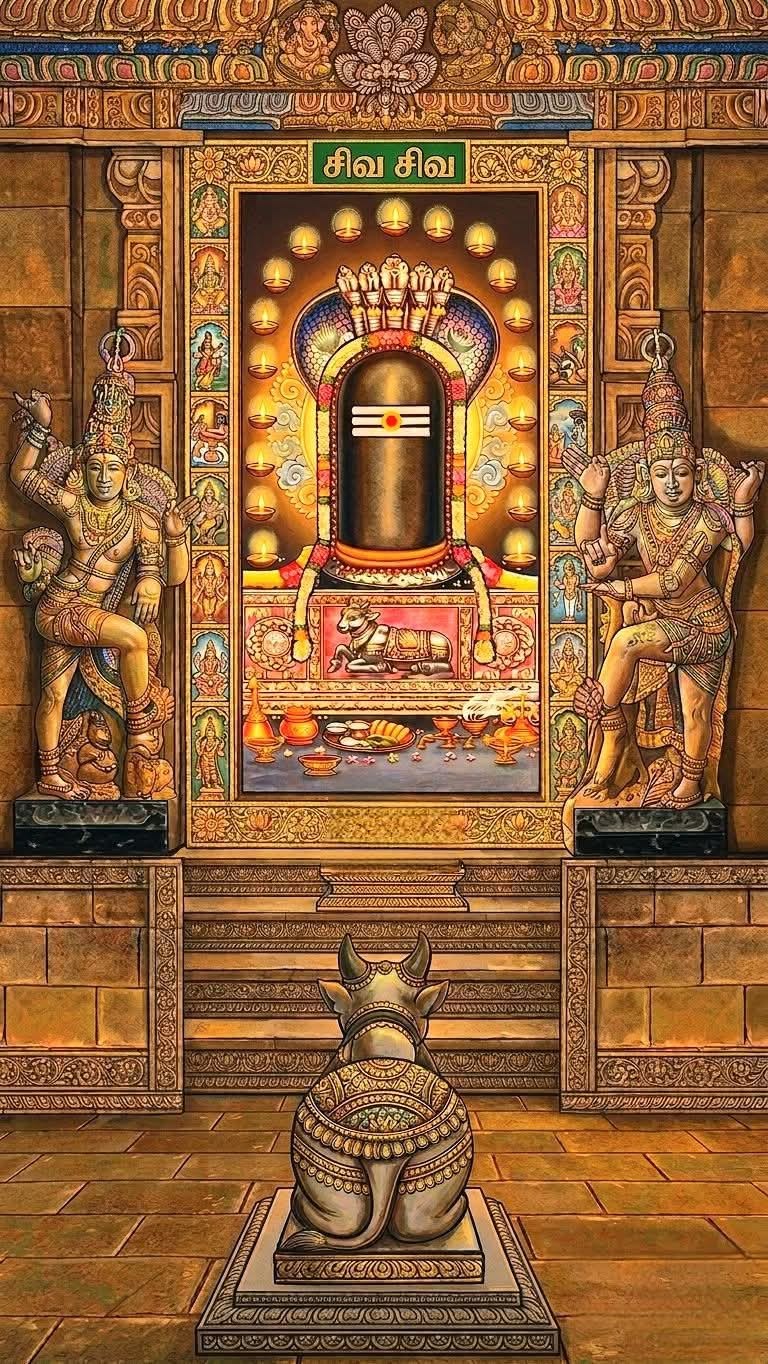
In Rudrābhiṣekam, water and other sanctified substances are offered over the Śiva Liṅga while Śrī Rudram and other Vedic mantras are recited.
The Śiva Liṅga is not merely a physical object. It is a sacred symbol through which the formless Lord is approached in worship.
The continuous flow of water represents:
- Purity.
- Continuity.
- Life-giving grace.
- Surrender.
- The removal of inner agitation.
- The devotee’s offering of all actions to Īśvara.
The abhiṣekam is performed not because the Lord requires cleansing, but because the devotee requires a sacred means of expressing bhakti.
The Lord is ever-pure. The ritual purifies the mind of the worshipper.
The Role of the Water
Water occupies a central place in Vedic worship. It sustains all life and is associated with purity, nourishment and grace.
When water is offered during Rudrābhiṣekam, the devotee contemplates:
“May my thoughts, words and actions become pure. May the grace of Īśvara flow continuously in my life.”
The water ultimately returns to the earth. This reminds us that worship is not separate from the natural order. The elements themselves are honoured as manifestations of Īśvara.
Laghunyāsa and Mahānyāsa
Before Rudram is recited, the ritwiks may perform Laghunyāsa or Mahānyāsa, depending on the tradition they follow.
The word nyāsa means “placing” or “establishing.” Through mantra and gesture, different parts of the body are associated with sacred powers and cosmic principles.
The purpose is to prepare the body, breath, speech and mind for Vedic recitation.
The chanter is reminded:
“This body, this breath and this voice are instruments offered to the Lord.”
Laghunyāsa is a shorter form of this preparatory practice. Mahānyāsa is more extensive. The choice between them belongs to the officiating Vedic tradition.
The Deities Invoked in the Worship
Although Rudra is the principal Devatā of Śrī Rudram, traditional Vedic worship commonly begins with the invocation of other deities connected with the success of the rite.
Śrī Gaṇapati
Gaṇapati is worshipped at the beginning as Vighneśvara, the remover of obstacles.
ॐ गणानां त्वा गणपतिं हवामहेOṃ gaṇānāṃ tvā gaṇapatiṃ havāmahe
“We invoke You, O Lord of the hosts.”
Agni
Where a homa is included, Agni serves as the sacred medium through which offerings are made. In a japam and abhiṣekam observance without homa, Agni is not the central offering medium.
Ambikā and Pārvatī
In Śaiva worship, the presence of Śakti is inseparable from Śiva. Pārvatī, Umā and Ambikā are worshipped as the Divine Mother and the power of the Lord.
Śiva and Śakti are not two independent realities. Śiva is the consciousness and Śakti is the power through which the universe functions.
Nandikeśvara
Nandi, the sacred bull and attendant of Lord Śiva, represents steadfast devotion, strength and disciplined service. In a temple setting, devotees traditionally approach Śiva through the presence of Nandi.
The Dikpālas and Other Devatās
According to the ritual paddhati, guardians of the directions, the Navagrahas, the Kumbha Devatās and other deities may be invoked during the preliminary or concluding rites.
The exact list depends on the prayoga followed by the Ācārya. These invocations do not diminish the centrality of Rudra. They acknowledge the order of the cosmos over which Īśvara presides.
The Spiritual Purpose of Rudra Worship
Rudra worship is traditionally performed for:
- Śānti, peace.
- Ārogya, health and well-being.
- Āyuḥ, longevity.
- Kṣema, protection and security.
- Pāpa-kṣaya, purification from harmful tendencies.
- Buddhi-śuddhi, clarity and refinement of the intellect.
- Dharma-niṣṭhā, steadfastness in righteous living.
- Bhakti, devotion.
- Jñāna, spiritual knowledge.
- Mokṣa, freedom from fundamental ignorance and limitation.
These are traditional spiritual aims. They should not be understood as mechanical promises or as substitutes for medical, legal or financial guidance.
The Vedic ritual is a sacred discipline. Its deeper fruit is a mind that becomes quieter, humbler, more prayerful and more capable of recognizing the presence of Īśvara.
The Inner Meaning of Rudra Worship
From the standpoint of Vedānta, the Lord whom we worship is not separate from the order of the universe or from the inner self.
Rudra is invoked as the Lord of all that moves and does not move, all that is seen and unseen, all that is born and all that returns to its source.
When the devotee offers water, flowers and mantra, the external act supports an internal understanding:
“Nothing is separate from Īśvara. My body, my breath, my thoughts, my duties and the entire world are sustained by the same Divine Order.”
The ritual begins with external worship. Through reflection, it leads toward inner worship.
The devotee first sees Śiva in the Liṅga. Then the devotee learns to see Śiva in all beings. Finally, through knowledge and contemplation, the devotee is guided toward the recognition of the Self as non-separate from Brahman.
This is why Rudra worship has such a revered place in the Vedic tradition.
A Prayer for All
Rudra worship is not intended only for the benefit of one individual or one family. The spirit of Vedic prayer is expansive.
A suitable concluding prayer is:
सर्वे भवन्तु सुखिनःसर्वे सन्तु निरामयाः ।सर्वे भद्राणि पश्यन्तुमा कश्चिद्दुःखभाग्भवेत् ॥Sarve bhavantu sukhinaḥsarve santu nirāmayāḥsarve bhadrāṇi paśyantumā kaścid duḥkhabhāg bhavet
“May all be happy. May all be free from disease. May all behold what is auspicious. May no one suffer.”
This prayer reflects the true spirit of Vedic worship: personal prayer expands into prayer for the family, the community, the nation, the world and all beings.
Conclusion
Śrī Rudra Ekādaśinī is an expression of profound Vedic devotion.
Through Namakam, we bow to Rudra in His countless forms. Through Chamakam, we pray for the strength, nourishment, knowledge and grace required for a complete life. Through abhiṣekam, we offer water as a symbol of purity and surrender. Through repeated recitation, we discipline the mind and establish a sacred atmosphere.
The devotee does not worship Rudra out of fear alone. The devotee approaches Rudra with bhakti, knowing Him as the Lord who removes sorrow, grants auspiciousness, protects all beings and leads the mind from fear to peace, from agitation to clarity and from limitation to freedom.
Namaḥ Śivāya.
Share this post
The meaning and significance of Śrī Rudram: the name Rudra, Namakam and Chamakam, the number eleven, the Ekādaśa Rudras, Rudrābhiṣekam and the inner meaning of Rudra worship.